Schedule a Tour
The Village at The Triangle
Rehabilitation vs Nursing Home in Austin, TX: Understanding the Right Level of Care After a Hospital Stay
In Central Austin, life moves fast. Families juggle work, kids, and packed calendars, and many older adults still want to feel connected to the city they love. Then a hospital stay happens. Discharge planning starts. Suddenly you’re hearing new terms, rehabilitation, skilled nursing, “next steps,” and you’re expected to make a decision that affects safety, comfort, and independence.
It makes sense that this moment can feel overwhelming. Rehabilitation and nursing homes are often discussed in the same breath, but they serve different roles in recovery and long-term care planning. This guide breaks down what each option typically provides, how they differ, and what families in Austin often consider once a hospital stay is behind them.
Here’s what we’ll cover:
- What post-acute rehabilitation is meant to accomplish
- What nursing homes (skilled nursing facilities) provide
- The most important differences in care level and length of stay
- What families often evaluate once rehab ends
- How a full continuum senior living community can support evolving needs over time
Rehabilitation vs Nursing Home: What’s the Fundamental Difference?
Post-acute rehabilitation is designed for short-term recovery. It combines therapy and clinical support to help someone regain strength, mobility, and function after an illness, injury, or surgery. A nursing home, also called a skilled nursing facility, centers on ongoing, 24-hour medical oversight for people with complex or chronic needs who require consistent nursing care over a longer period.
Put simply, the distinction comes down to the goal. Rehabilitation is focused on measurable improvement and discharge planning. Skilled nursing is focused on long-term clinical management and supervision.
Families in Austin often hear both options during hospital discharge conversations. The right setting depends on the individual’s recovery trajectory, the complexity of medical needs, the level of supervision required, and how long care is expected to continue. Choosing the appropriate level of care can protect safety now while preserving independence for the future.
What Is Post-Acute Rehabilitation Designed to Achieve?
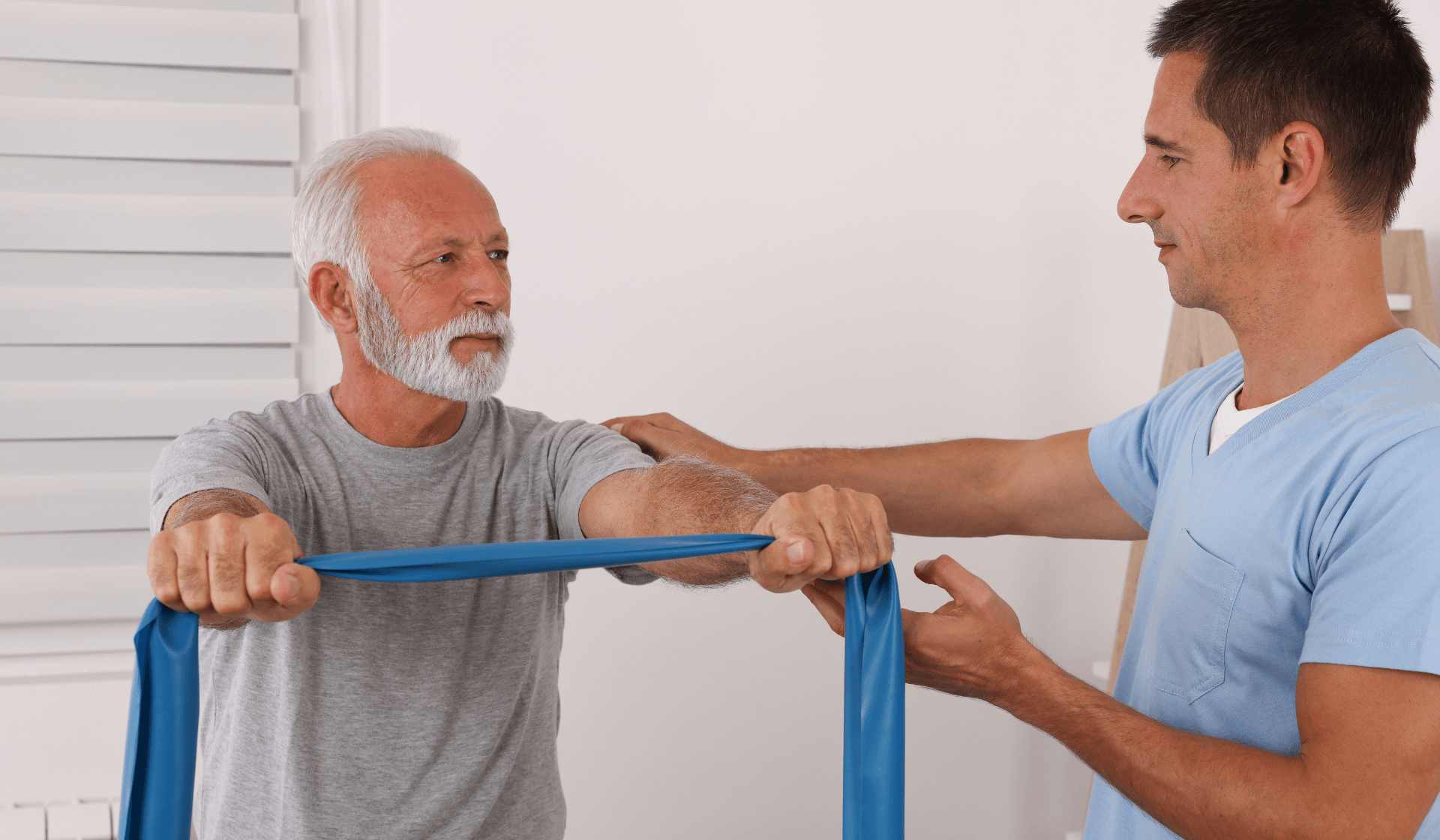
Post-acute rehabilitation provides structured therapy and short-term nursing support following hospitalization. The purpose is to help someone regain function so they can safely return home or transition to a lower level of support.
Rehabilitation tends to be highly organized. Therapy sessions are frequent and goal-driven. Progress is measured against clear milestones, such as walking independently with a device, safely transferring in and out of bed, or improving endurance enough to complete daily routines. Care plans are meant to be temporary, and discharge planning begins early because the expectation is that the person will continue to the next phase once goals are met.
Rehab is a transitional setting. It is not intended as a long-term place to live, even though some individuals may need an extended stay depending on their recovery pace.
Situations That Commonly Lead to Rehabilitation
Physicians often recommend rehabilitation after events where therapy can reasonably improve function, such as:
- Recovery after joint replacement or orthopedic surgery
- Therapy following a stroke or cardiac event
- Rebuilding strength and balance after a fall
- Recovery after a serious illness that caused deconditioning
- Short-term therapy when improvement is expected with consistency and support
Rehab is built around momentum. The goal is to help the person progress, stabilize, and move forward.
What Is a Nursing Home (Skilled Nursing Facility)?
A nursing home, or skilled nursing facility, provides continuous licensed nursing care and medical oversight for people whose conditions require long-term supervision and treatment. This setting is typically appropriate when medical needs remain intensive, recovery has limited potential, or safety requires ongoing clinical monitoring.
Skilled nursing is structured around medical management. Daily life often includes regular nursing interventions, complex medication oversight, and care planning that supports chronic or progressive conditions. Length of stay can be extended, and for some individuals it becomes the long-term plan.
In the Austin area, skilled nursing is commonly recommended when recovery is not expected to return someone to a stable level of independence, or when medical monitoring needs to remain consistent and high.
Who Typically Requires Long-Term Skilled Nursing?
Skilled nursing is often the right fit for individuals who need continuous clinical support, including:
- People with advanced or progressive health conditions requiring frequent monitoring
- Individuals needing regular nursing interventions and ongoing treatment
- Those who cannot safely complete daily activities, even with consistent help
- People who need around-the-clock nursing oversight for medical stability
This level of care is medical by design, and it functions differently than senior living communities that focus on residential lifestyle and daily support.
Rehabilitation vs Nursing Home: A Clear Comparison for Families
When you line the two options up side-by-side, the differences become easier to understand. Consider the following visual aid:
| Category | Rehabilitation (Post-Acute Care) | Nursing Home (Skilled Nursing) |
| Primary Purpose | Short-term recovery | Long-term medical management |
| Length of Stay | Temporary | Often ongoing |
| Medical Intensity | Recovery-focused | Continuous clinical supervision |
| Therapy Services | Frequent, milestone-based | Limited or maintenance-focused |
| Living Environment | Transitional | Medical-centered |
| Discharge Goal | Return home or lower care | Continued medical oversight |
| Best Fit For | Individuals expected to improve | Individuals with complex conditions |
Many people experience rehabilitation as one phase of a broader care journey. After rehab, families often reassess needs, safety, and the best living environment for the next season of life.
What Comes After Rehabilitation?
When rehabilitation goals are achieved, families often arrive at a practical question: what now?
At that point, many families evaluate whether returning home is sustainable, whether skilled nursing is still medically necessary, or whether a supportive residential environment would make daily life safer and easier. For some older adults, a transition to independent living can be a comfortable option if they are medically stable and fully independent but want convenience, community, and fewer home responsibilities. For others, assisted living can provide daily support, such as medication management and help with activities of daily living, while still protecting autonomy and dignity. If new cognitive concerns are emerging, memory care may become an important consideration for long-term safety and specialized support.
The goal after rehab is often continuity. Families want a plan that reduces risk, supports routine, and makes life feel livable again.
How The Village at The Triangle Supports the Next Chapter
The Village at The Triangle does not provide rehabilitation or skilled nursing. However, it offers a full continuum of Independent Living, Assisted Living, and Memory Care on one campus in Central Austin. This offers a meaningful advantage for families planning beyond the immediate recovery phase.
This is a community designed for people who still want a vibrant lifestyle. Residents enjoy contemporary residences with luxury finishes and a resort-style feel, with amenities such as a pool, fitness options, sky lounge, and inviting terraces. The location in The Triangle keeps residents close to dining, entertainment, shopping, and medical resources, which matters for many Austinites who value staying connected to the rhythm of the city. Restaurant-style dining and a robust calendar of activities, events, and excursions support the social side of well-being—especially after a health event when isolation can sneak in.
For many residents and families, one of the most reassuring aspects is continuity. As needs evolve, a full continuum community can support transitions between levels of care without leaving familiar surroundings or starting over socially.
To learn more, visit:
How Do Austin Families Know Which Path Is Right?
The best decisions combine clinical guidance with real-world lifestyle needs. Families often start with these questions: Is the person medically stable? Are therapy goals complete? Can daily routines be done safely? Is continuous nursing supervision still required? What environment will support long-term quality of life, not just short-term problem-solving?
It is also normal for the answer to change over time. Care decisions are not always one-and-done, and proactive planning often leads to calmer transitions than crisis-driven ones.
Exploring Senior Living Options in Central Austin
Rehabilitation supports recovery. Skilled nursing supports ongoing medical needs. Once medical stability is achieved, independent living, assisted living, and memory care can provide residential options that protect both safety and quality of life.
For families seeking an upscale, engaged lifestyle in the heart of Austin, The Village at The Triangle offers a vibrant, full-continuum campus designed for long-term planning. To learn more, schedule a tour, or talk through personalized options in Austin, TX, call (737) 237-9908.
FAQ
Is skilled nursing always permanent?
Not always. Length of stay depends on the person’s medical condition and recovery potential. Some people need skilled nursing for a period of stabilization, while others require long-term clinical oversight due to complex or progressive needs.
Can someone move directly from rehabilitation into independent living?
It can be possible when the individual is medically stable, fully independent with daily tasks, and safe without ongoing hands-on support. Physician recommendations, therapy progress, and home safety factors all play a role in determining readiness.
How does a full continuum community help families plan long-term?
Having multiple care levels on one campus allows families to plan for today while staying prepared for tomorrow. It can reduce the stress of future moves, support smoother transitions if needs change, and help residents maintain familiar routines and relationships.
Helpful Links for Senior Living
Related Reading
- Remote Patient Monitoring Available at Assisted Living Community in Central Austin, TX
- New Home for the Holidays: Bringing Traditions When Downsizing
- The Joy of Connection from Senior Living Communities
The Village at The Triangle is proudly part of The Aspenwood Company’s Senior Living family. Our senior living community in Austin, TX offers Independent Living, Assisted Living, and Memory Care designed to support independence, comfort, and meaningful connection. With beautifully appointed residences, engaging activities, and personalized services, we reflect The Aspenwood Company’s commitment to helping every resident Live Life Well®. We are proud that the following communities are also part of The Aspenwood Company’s senior living family: Village on the Park Stonebridge Ranch, Village on the Park Plano, The Doliver of Tanglewood, The Village of the Heights, Village on the Park Denton, The Village of Meyerland, Village on the Park Bentonville, Wood Glen Court, Spring Creek Village, Village on the Park Rogers, The Village at the Triangle, Village on the Park Onion Creek, Heartis Mid Cities, and Village on the Park McKinney. No matter which community you choose, our shared goal is to help each resident feel safe, valued, and at home.